

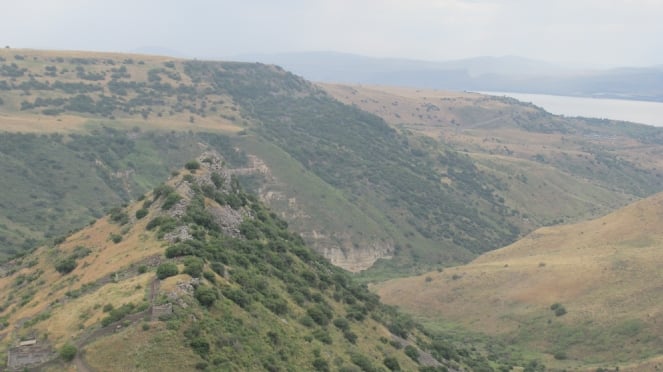
 When I recently visited multiple historical sites on a visit to Israel, I allowed my mind to wonder back in time and do some imagination. Whether it was walking on the cobblestones of the Old City of Jerusalem, praying at the Western Wall, or took a hike at the ancient Gamla Fortress in the Golan Heights, I allowed my mind and thoughts to journey back in time and revisit some Jewish history.
The stones of Jerusalem seem to almost tell their story just by there presence, as one can almost paint in one's mind the happenings, the busy market places, the crowding on the Holidays and especially the High Holidays, and then the terrible sadness and destruction that must have filled those streets when the Temples were destroyed by the Babylonians and Romans.
When walking in the Gamla nature reserve in the Golan Heights next to where the ancient fortress of Gamla used to stand, and seeing the place where 9,000 Jews made a final stand against the invading Roman Armies, one can't help but think about how history has continued and the Jewish presence, goals and mission continue to thrive on the very same spots where they were once destroyed.
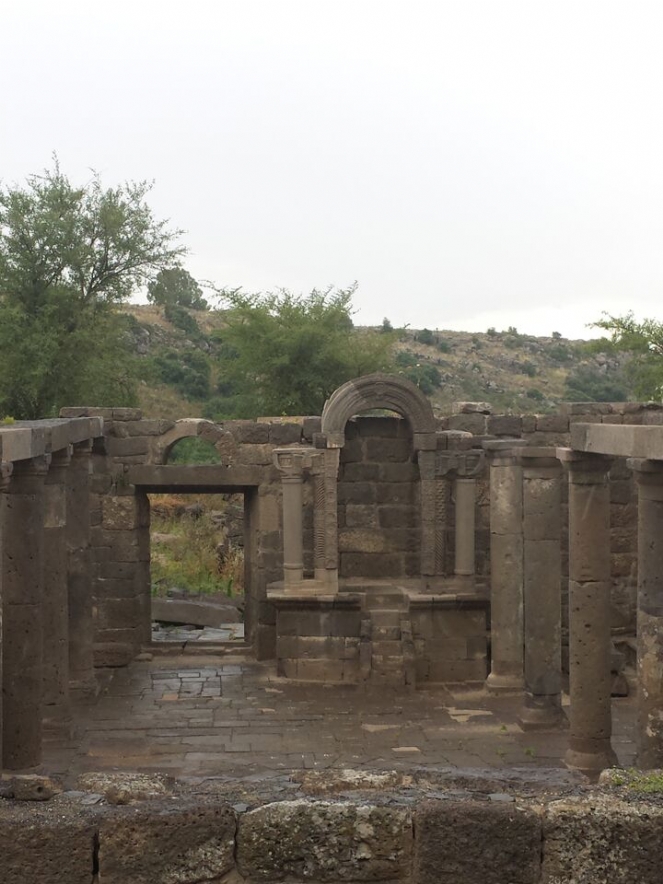
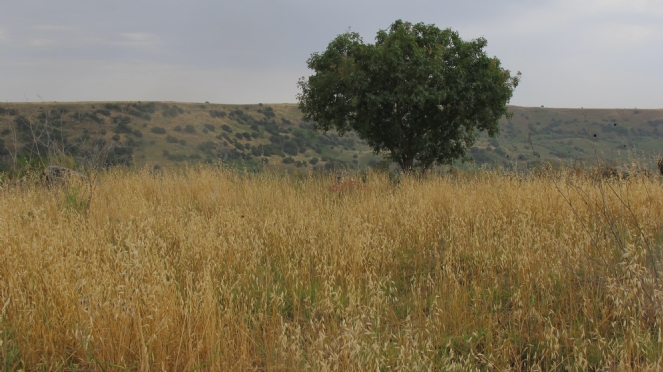 On another walk in the Golan, I went off the beaten path to a place that is not so well knows, called Umm al Kanatir. This is a place where an ancient Jewish village and Synagogue stood until the year 749 CE. One of the unique features of this site is the eighteen foot tall stone ark along with its detailed engravings that survived almost intact along with half the walls and other features, despite a powerful earthquake that disturbed and destroyed so much. In this place, I couldn’t help but try to imagine what Jewish life must have been like at a time when Jewish life was at a bare minimum in the Holy Land, when most Jews already lived in the diaspora, and Jewish life was spread very thinly in the land of Israel. The Synagogue had obviously served as a central point, and its viewpoint over the hills of the Golan down into the plains of Northern Israel, made the focal point of Jerusalem remain at the center of Jewish Life and Prayer.
Overall the visits to these kinds of places along with some other special sites that we saw, evoked a ton of history, emotions and reflections, as I thought about the journey of Abraham and Sarah as I prayed at their resting place in Hebron, the peak of Jewish life when the Temples existed as I walked through the streets of Old City of Jerusalem, and how Jewish life dealt with the tragedy of destruction, and the determination to succeed and continue, long after the temples had been destroyed in other places that I visited in Israel.
No matter which time frame the places I visited represented, a common denominator that was clear in each of these places (along with so many other historical Jewish sites and stories) has been the faithful observance of Jewish traditions and Mitzvot, evidence of which can be seen in each of these places.
Throughout our long history it is precisely these actions that unite every generation of Jews with generations of Jews who preceded us from Biblical and Temple times to more modern times. The very same actions, morals, prayers, rituals and long term visions that were essential to the spiritual destiny and values of the Jews who lived in the mountains of Gamla or who walked on the cobblestones of Jerusalem, have been the glue that have bound us all together and have helped shape our common identity as one people with a unifying and determined goal.
 Tomorrow evening as we mark the 9th of Av, the date of the destruction of the First and Second Temples, 2500 and 2000 years ago, and as we focus on the past and mourn the destruction and the resulting exile, we also take the time to focus and think about the future and the positive direction and way of living, where humanity will ultimately succeed in reaching. The message of our long history is clear, we are here to stay and here to do G-d's will in changing the world and making it the positive place it needs to be. Our job is to continue living and perpetuating those same actions and spiritual values that have been part of our people for so long, since in doing so we can be confident that the spiritual dreams and destiny of the Jewish people will gradually be achieved one day, one person, and one action at a time.
Our sages say that the birth of the Messiah took place on the same day as the destruction of the Temples. Metaphorically speaking, the hopes and goals of the future have always been a part of the Jewish narrative, and despite whatever we have experienced, we have kept this positive mindset as part of our long term goal and vision. To me this means that when we take the time to think of the difficult moments and challenges that our ancestors faced in ancient and in more recent times, along with that, we must also have a strong focus on the future, and ask ourselves how am I making the difference to the world that G-d put me in, and how am I ensuring that the world will be the best place that it can be.
Shabbat Shalom
Yisroel